
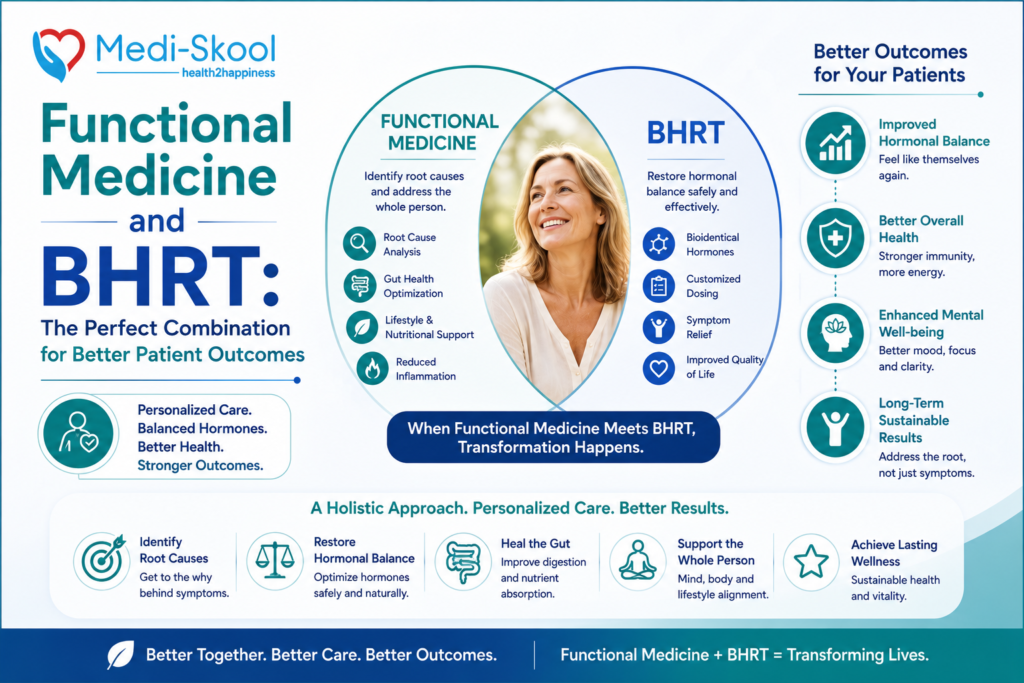
Modern healthcare is undergoing a significant transformation. Patients today are looking for more than symptom management they want personalized care, long term wellness and solutions that address the root causes of their health concerns. As a result, approaches such as Functional Medicine and Bioidentical Hormone Replacement Therapy (BHRT) are gaining increasing attention among healthcare professionals and patients alike.
While both Functional Medicine and BHRT can be powerful on their own, combining these approaches often creates a more comprehensive strategy for improving patient outcomes. Together, they allow practitioners to identify underlying imbalances, optimize hormone health, and develop personalized treatment plans that support overall wellbeing.
This growing interest is one reason why healthcare professionals are enrolling in a BHRT Training Course to better understand how hormone optimization can be integrated into a Functional Medicine framework.
Understanding Functional Medicine
Functional Medicine is a patient centered approach that focuses on identifying and addressing the root causes of disease rather than simply managing symptoms.
Instead of asking, “What medication can treat this condition?” Functional Medicine asks, “Why is this condition happening in the first place?”
Practitioners evaluate multiple factors that influence health, including:
- Nutrition
- Gut health
- Hormonal balance
- Stress
- Sleep quality
- Environmental exposures
- Lifestyle habits
- Inflammation
- Metabolic health
By understanding how these factors interact, practitioners can create personalized strategies designed to improve long term health outcomes.
What Is BHRT?
Bioidentical Hormone Replacement Therapy (BHRT) uses hormones that are structurally identical to those naturally produced by the human body.
BHRT is commonly used to address symptoms and conditions associated with hormonal imbalances, including:
- Menopause
- Perimenopause
- Thyroid dysfunction
- Adrenal dysfunction
- Fatigue
- Sleep disturbances
- Mood changes
- Metabolic concerns
- Healthy aging support
Unlike a one size fits all approach, BHRT often involves individualized assessment and treatment planning based on a patient’s specific hormone profile and health needs.
Why Hormones Matter More Than Many People Realize
Hormones influence nearly every system in the body.
They regulate:
- Energy production
- Metabolism
- Mood
- Sleep
- Reproductive health
- Cognitive performance
- Cardiovascular function
- Bone health
When hormone levels become imbalanced, patients may experience symptoms that affect multiple aspects of their lives.
Common complaints include:
- Persistent fatigue
- Weight gain
- Brain fog
- Anxiety
- Low motivation
- Sleep problems
- Reduced quality of life
Unfortunately, many patients spend years seeking answers without receiving a comprehensive evaluation of their hormonal health.
Where Functional Medicine and BHRT Intersect
One of the reasons Functional Medicine and BHRT work so well together is that both approaches emphasize personalization.
Functional Medicine seeks to identify the factors contributing to hormone imbalances, while BHRT helps restore hormonal balance when appropriate.
Instead of focusing only on replacing hormones, practitioners investigate questions such as:
- Why did hormone levels become imbalanced?
- Is chronic stress contributing to dysfunction?
- Are nutritional deficiencies involved?
- Is poor sleep affecting hormone production?
- Could gut health issues be influencing hormone metabolism?
- Is inflammation disrupting endocrine function?
This deeper investigation often leads to more sustainable and meaningful health improvements.
Looking Beyond Symptoms
Traditional healthcare models sometimes focus primarily on symptom management.
For example, a patient experiencing fatigue may receive treatment for the symptom itself without a full investigation into the underlying causes.
A Functional Medicine approach combined with BHRT encourages practitioners to explore multiple contributing factors.
These may include:
- Hormonal imbalances
- Chronic inflammation
- Nutrient deficiencies
- Gut dysfunction
- Stress related changes
- Metabolic disturbances
By addressing these interconnected factors, clinicians can develop more comprehensive treatment strategies.
The Importance of Personalized Care
No two patients are exactly alike.
Two individuals with similar symptoms may have completely different underlying health challenges.
This is why personalized medicine is becoming increasingly important.
A Functional Medicine and BHRT approach allows practitioners to create treatment plans based on:
- Detailed health histories
- Laboratory findings
- Lifestyle factors
- Hormone assessments
- Individual goals
This personalized model often helps patients feel heard, understood and actively involved in their healthcare journey.
Advanced Lab Interpretation Improves Outcomes
One of the most valuable aspects of combining Functional Medicine and BHRT is the emphasis on comprehensive assessment.
Practitioners often evaluate:
- Hormone levels
- Thyroid function
- Metabolic markers
- Nutritional status
- Inflammatory markers
- Stress-related indicators
Understanding how these factors interact helps clinicians make more informed decisions and create targeted treatment plans.
This is one of the key skills taught in a high quality BHRT Training Course.
Supporting Women Through Hormonal Transitions
Women frequently experience significant hormonal changes throughout life.
These transitions may occur during:
- Perimenopause
- Menopause
- Post menopause
- Thyroid dysfunction
- Reproductive health challenges
Functional Medicine and BHRT can work together to help practitioners better understand these changes and develop individualized support strategies.
Rather than focusing solely on symptom relief, clinicians can investigate the factors influencing hormonal health and overall wellbeing.
Supporting Healthy Aging
Healthy aging is becoming a major focus of modern healthcare.
Patients increasingly want to maintain:
- Energy
- Cognitive performance
- Physical function
- Metabolic health
- Quality of life
Hormonal health plays an important role in these goals.
By combining Functional Medicine principles with BHRT strategies, practitioners can develop comprehensive plans that support long term vitality and wellness.
Why Healthcare Professionals Are Seeking BHRT Education
As demand for personalized hormone care continues to grow, many healthcare professionals are pursuing specialized education.
A BHRT Training Course helps practitioners:
- Understand hormone physiology
- Improve laboratory interpretation skills
- Develop individualized treatment strategies
- Gain confidence in hormone management
- Integrate Functional Medicine principles into practice
This knowledge allows clinicians to provide more comprehensive care while expanding their professional expertise.
Learning from Experienced Experts
Clinical success often depends on learning from practitioners with real world experience.
Dr. Priti Nanda Sibal has spent more than 30 years helping patients improve their health through Functional Medicine, metabolic health optimization, diabetes management, gut health restoration and hormone focused care.
Her approach emphasizes root cause investigation, personalized medicine and evidence based strategies designed to support lasting health improvements.
Through advanced training and mentorship, healthcare professionals can learn how to apply these principles effectively in their own clinical practices.
The Future of Personalized Healthcare
Healthcare is moving toward a more personalized and patient-centered model.
Patients increasingly expect care that considers their unique biology, lifestyle and health goals.
Functional Medicine and BHRT represent two powerful tools that support this shift.
Together, they provide a framework for understanding complex health challenges, addressing root causes and optimizing overall wellbeing.
For practitioners committed to delivering exceptional patient care, integrating these approaches can lead to better clinical outcomes and greater patient satisfaction.
Conclusion
Functional Medicine and BHRT complement each other remarkably well because both focus on personalization, root cause analysis and long term wellness.
While Functional Medicine investigates the factors contributing to hormonal dysfunction, BHRT provides a targeted strategy for supporting hormone balance when appropriate. Together, these approaches help practitioners move beyond symptom management and create comprehensive treatment plans that address the whole person.
As patient demand for personalized healthcare continues to grow, more clinicians are turning to advanced education through a BHRT Training Course to develop the knowledge and confidence needed to integrate these approaches successfully.
With guidance from experienced experts such as Dr. Priti Nanda Sibal, healthcare professionals can transform their clinical practice and help patients achieve better long term health outcomes.
FAQs
1. What is the relationship between Functional Medicine and BHRT?
Functional Medicine identifies the root causes of hormonal imbalances, while BHRT helps support hormone optimization through personalized treatment strategies.
2. Why do Functional Medicine practitioners use BHRT?
BHRT can be incorporated into a broader Functional Medicine approach when hormone imbalances are identified as a contributing factor to a patient’s symptoms or health concerns.
3. Can BHRT improve patient outcomes?
When used appropriately and as part of a comprehensive care plan, BHRT may help support hormone balance, energy levels, sleep quality and overall wellbeing.
4. Why is personalized care important in hormone health?
Every patient has unique hormone levels, symptoms, lifestyle factors and health goals. Personalized care allows treatment strategies to be tailored to individual needs.
5. What can healthcare professionals learn from a BHRT Training Course?
A BHRT Training Course teaches hormone physiology, laboratory interpretation, treatment planning, Functional Medicine integration and practical clinical strategies for managing hormone related health concerns.