
Hormonal imbalances can affect nearly every aspect of health, including energy levels, mood, sleep quality, metabolism, reproductive health and overall wellbeing. As people live longer and become more proactive about their health, the demand for effective hormone therapies continues to grow.
When exploring treatment options, two terms often come up: Bioidentical Hormone Replacement Therapy (BHRT) and Traditional Hormone Replacement Therapy (HRT). Although both approaches aim to address hormone deficiencies and imbalances, there are important differences in how they are designed, prescribed, and personalized.
For healthcare professionals looking to understand modern hormone management strategies, a BHRT Training Course provides valuable insights into these differences and their clinical applications.
Understanding Hormone Replacement Therapy
Hormones are chemical messengers that regulate numerous functions throughout the body.
They influence:
- Metabolism
- Growth and development
- Reproductive health
- Sleep
- Mood
- Cognitive function
- Cardiovascular health
- Bone health
As individuals age or experience certain health conditions, hormone levels may decline or become imbalanced.
Hormone replacement therapies aim to restore hormonal balance and help manage symptoms associated with these changes.
What Is Traditional Hormone Replacement Therapy?
Traditional Hormone Replacement Therapy (HRT) has been used for decades to manage symptoms associated with menopause and other hormone-related conditions.
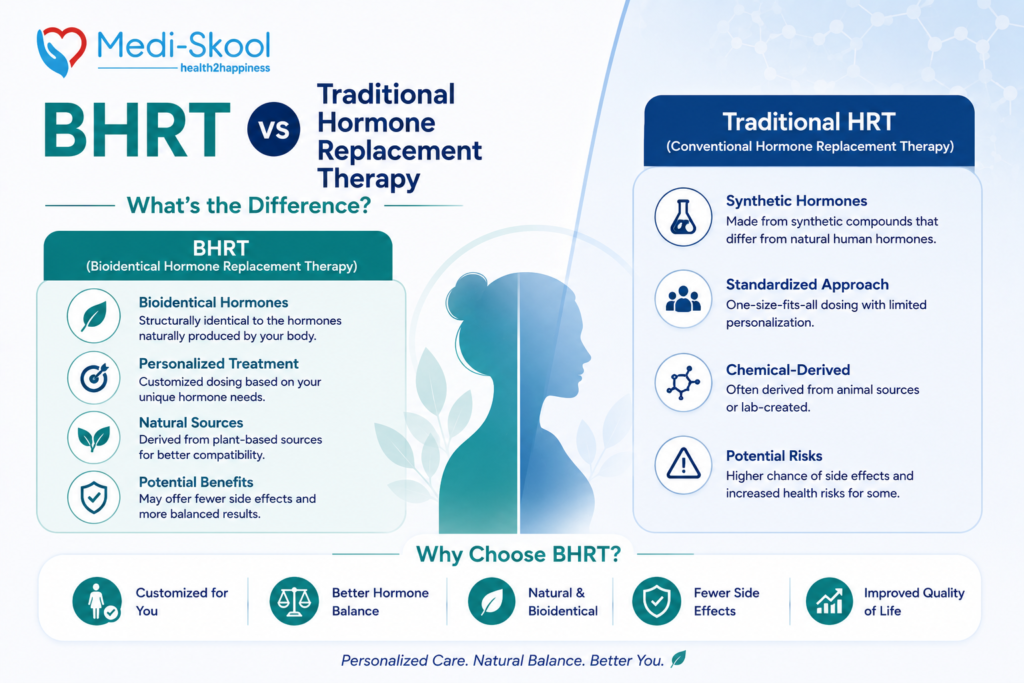
Traditional HRT often involves synthetic hormones or hormones derived from animal sources that may not be structurally identical to the hormones naturally produced by the human body.
These therapies are commonly prescribed to help address symptoms such as:
- Hot flashes
- Night sweats
- Mood changes
- Vaginal dryness
- Sleep disturbances
- Reduced quality of life during menopause
Traditional HRT has helped many individuals manage hormone related symptoms and remains an important treatment option in modern medicine.
What Is Bioidentical Hormone Replacement Therapy (BHRT)?
Bioidentical Hormone Replacement Therapy, commonly known as BHRT, uses hormones that are structurally identical to those naturally produced by the human body.
These hormones are often sourced from plant based compounds and then processed to match the molecular structure of human hormones.
The goal of BHRT is to provide a more personalized approach to hormone optimization by tailoring treatment according to an individual’s specific hormone levels, symptoms and health goals.
BHRT may be considered in the management of:
- Menopause
- Perimenopause
- Thyroid dysfunction
- Hormonal imbalances
- Low energy
- Sleep issues
- Mood concerns
- Healthy aging support
Healthcare professionals enrolled in a BHRT Training Course learn how bioidentical hormones can be integrated into individualized patient care plans.
The Key Difference: Molecular Structure
One of the most commonly discussed differences between BHRT and traditional HRT is molecular structure.
Bioidentical hormones are designed to have the same molecular structure as hormones naturally produced by the body.
Traditional hormone therapies may use synthetic compounds or hormones that differ slightly in structure.
Because BHRT hormones closely resemble naturally occurring hormones, many practitioners view them as part of a more personalized hormone management approach.
Personalization of Treatment
Another major distinction is the level of personalization involved.
Traditional HRT often follows standardized dosing protocols.
While adjustments may be made based on symptoms and patient response, treatment plans are generally based on established formulations.
BHRT, on the other hand, often emphasizes individualized assessment.
Practitioners evaluate:
- Symptoms
- Hormone levels
- Medical history
- Lifestyle factors
- Metabolic health
- Overall wellness goals
This personalized approach allows treatment strategies to be tailored to the unique needs of each patient.
A Functional Medicine Perspective
One reason BHRT continues to gain popularity is its integration with Functional Medicine principles.
Functional Medicine seeks to understand why hormone imbalances develop rather than simply replacing deficient hormones.
Practitioners may investigate factors such as:
- Stress
- Nutrition
- Gut health
- Sleep quality
- Environmental exposures
- Inflammation
- Metabolic function
Dr. Priti Nanda Sibal often emphasizes that long term hormone health requires addressing these underlying contributors rather than focusing solely on hormone replacement.
This broader perspective allows clinicians to create more comprehensive treatment plans.
The Importance of Comprehensive Assessment
Successful hormone management begins with proper evaluation.
Whether using BHRT or traditional HRT, understanding the patient’s overall health picture is essential.
A thorough assessment may include:
- Detailed medical history
- Symptom review
- Lifestyle evaluation
- Hormonal testing
- Metabolic assessment
- Nutritional evaluation
A high quality BHRT Training Course teaches practitioners how to interpret this information and apply it effectively in clinical practice.
Why Healthcare Professionals Are Learning BHRT
The demand for hormone focused healthcare is increasing rapidly.
Patients are becoming more informed about hormonal health and are actively seeking practitioners who understand personalized treatment approaches.
As a result, many healthcare professionals are pursuing specialized education to better serve their patients.
A BHRT Training Course helps clinicians:
- Understand hormone physiology
- Improve laboratory interpretation skills
- Develop personalized treatment plans
- Gain confidence in clinical decision-making
- Expand their healthcare services
This knowledge allows practitioners to address a growing area of patient need.
The Role of Clinical Training
Hormonal health is complex.
Two patients with similar symptoms may have very different underlying hormonal patterns.
This is why advanced clinical education is so important.
Through structured learning and mentorship, healthcare professionals gain practical skills in:
- Hormone assessment
- Treatment planning
- Monitoring progress
- Patient education
- Clinical problem-solving
Dr. Priti Nanda Sibal’s educational approach focuses on helping practitioners bridge the gap between theory and real world implementation.
Which Approach Is Better?
There is no single answer that applies to every patient.
Both traditional HRT and BHRT have important roles in hormone management.
The most appropriate option depends on factors such as:
- Individual health status
- Symptoms
- Medical history
- Treatment goals
- Clinical evaluation
The focus should always be on evidence based decision making and personalized patient care.
Healthcare professionals who understand both approaches are often better equipped to help patients make informed decisions.
Conclusion
Hormonal health plays a critical role in overall wellbeing and both traditional HRT and BHRT aim to address hormone related imbalances.
The primary differences lie in hormone structure, personalization and treatment philosophy. While traditional HRT often follows standardized protocols, BHRT emphasizes individualized assessment and tailored care.
As patient demand for personalized healthcare continues to grow, more clinicians are seeking advanced education through a BHRT Training Course to better understand modern hormone management strategies.
With guidance from experienced experts such as Dr. Priti Nanda Sibal, healthcare professionals can develop the skills needed to confidently evaluate hormone imbalances, create personalized treatment plans and support long term patient wellness.
FAQs
1. What is the main difference between BHRT and traditional HRT?
BHRT uses hormones that are structurally identical to those naturally produced by the body, while traditional HRT may use synthetic hormones or hormones with different molecular structures.
2. Is BHRT more personalized than traditional HRT?
BHRT often involves individualized assessment and treatment planning based on a patient’s symptoms, hormone levels and health goals.
3. Who can benefit from hormone replacement therapy?
Individuals experiencing symptoms related to hormonal imbalances, menopause, thyroid dysfunction or age related hormonal decline may benefit from professional evaluation and treatment.
4. Why are healthcare professionals enrolling in BHRT Training Courses?
Healthcare professionals pursue BHRT Training Courses to improve their understanding of hormone physiology, laboratory interpretation, personalized treatment planning, and patient care.
5. How does Dr. Priti Nanda Sibal approach hormone health?
Dr. Priti Nanda Sibal uses a Functional Medicine perspective that focuses on identifying root causes, addressing lifestyle factors, and creating personalized strategies to support long term hormone balance and overall wellness.